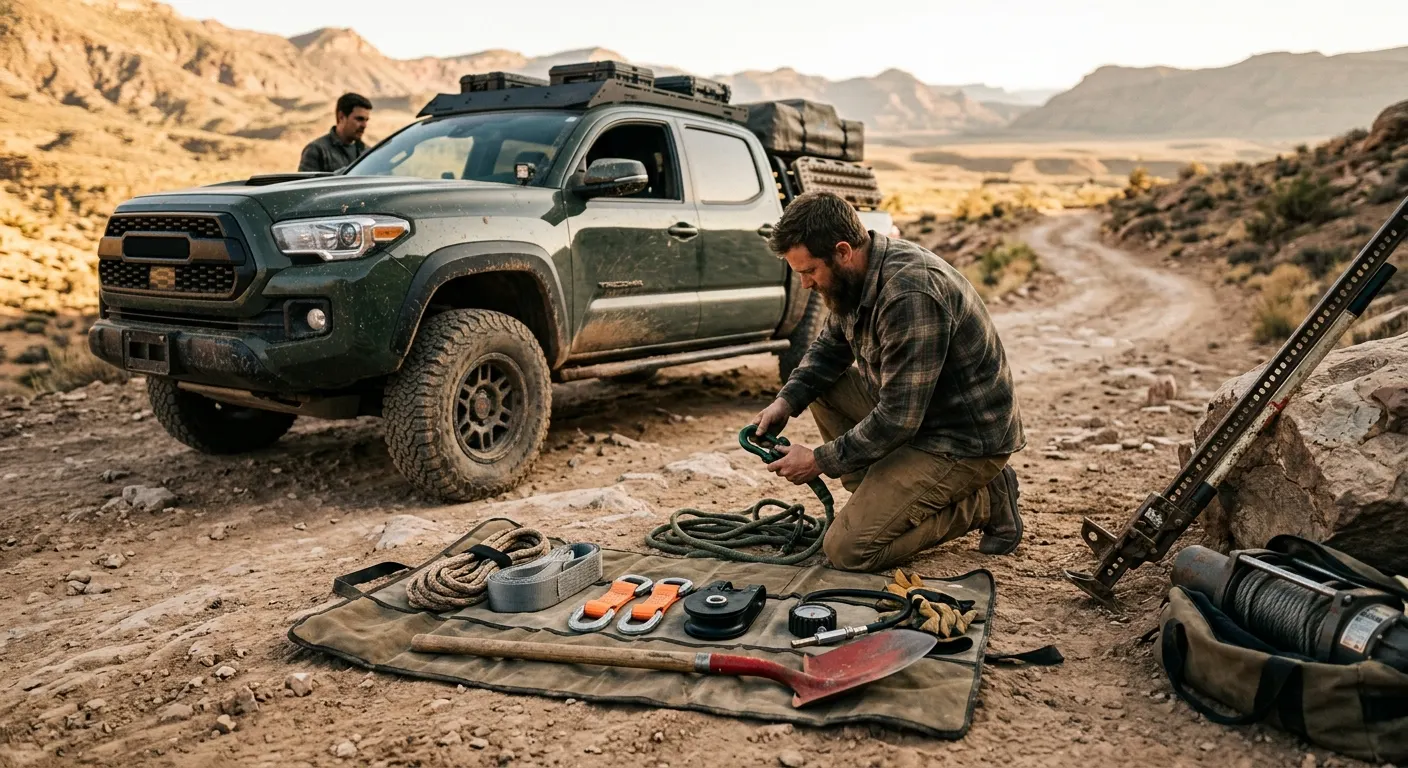
The question is never whether you will get stuck overlanding; it is whether you have the gear to get out. A pair of MAXTRAX MKII Vehicle Recovery Boards handles most soft-ground situations without a second vehicle. An ARB Kinetic Recovery Rope 7/8in x 30ft with a Factor 55 FlatLink Shackle Mount covers two-vehicle extractions. And a Warn Zeon 10-S Winch is the solo-recovery solution that means a remote route does not end your trip. The mistake most first-time overlanders make is buying cheap versions of these items and discovering their limits at the worst time.
Quick answer
Start every kit with MAXTRAX MKII traction boards and a quality snatch strap. Add a kinetic recovery rope and proper shackles for two-vehicle recoveries. Build toward a winch only if you regularly run remote routes solo. Cheap recovery gear fails at exactly the moment you need it most.
This guide contains affiliate links. TrailBaseGear may earn a commission at no cost to you.
Traction boards: the first buy for most overlanders
For sand, mud, and snow, a pair of MAXTRAX MKII Vehicle Recovery Boards resolves the majority of stuck situations without a tow vehicle, a winch, or even a second person. You dig out around the tire, slide the board under, drive forward slowly, and the aggressive cleat pattern bites into both the board and the tire to generate traction.
The MKII's reinforced nylon construction survives sustained wheel-spinning without cracking or deforming. This matters because cheap alternatives sold at half the price crack under sustained spinning, which is exactly when you are using them. The investment in genuine MAXTRAX boards is the difference between a recovery tool and a trail hazard.
Storage is straightforward: most overlanders mount a pair to their spare tire, their front runner rack using the MAXTRAX bracket, or inside the rear cargo area with a strap. For a Front Runner Slimline II Roof Rack rack, Front Runner sells dedicated MAXTRAX mounts that hold the boards securely without taking up floor space.
Field reference / File TBG-010 recovery gear
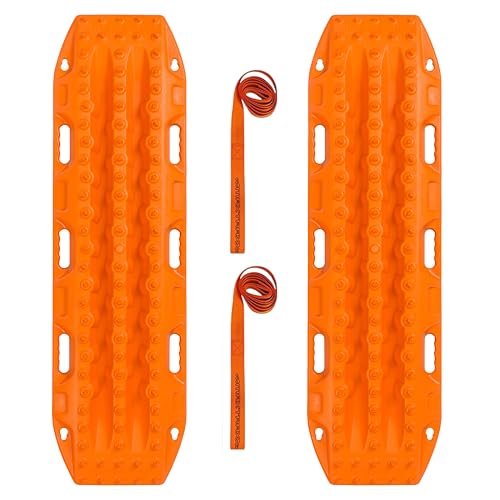
MAXTRAX MKII Vehicle Recovery Boards
The gold-standard traction boards used by professional expedition teams, molded in reinforced nylon with aggressive cleats that bite into sand, mud, and snow.
Field reference / File TBG-032 roof racks storage

Front Runner Slimline II Roof Rack
The most accessory-compatible modular roof rack on the market, with a low-profile laser-cut steel platform and direct-bolt fitment kits for hundreds of vehicle models.
Kinetic ropes and snatch straps
A kinetic recovery rope like the ARB Kinetic Recovery Rope 7/8in x 30ft is different from a standard tow strap. Standard straps have no stretch and transmit a shock load through the recovery points and drivetrain of both vehicles on extraction. Kinetic ropes stretch under load, storing energy like a spring and releasing it as a smooth extraction force rather than a jolt.
Pair the rope with a Bubba Rope Sidewinder Snatch Strap 30ft as your basic static strap backup and rated recovery shackles like the Factor 55 FlatLink Shackle Mount on every attachment point. The shackle rating matters: rated at 40,000 pounds, a Factor 55 FlatLink is safe across any traction board, kinetic rope, or strap scenario you will encounter.
Never use a standard tow hook as a recovery point. Factory tow hooks on most vehicles are designed for a slow, controlled tow, not a high-energy snatch recovery. A bent or failed hook during a snatch can become a projectile. Use proper recovery points on the bumper or frame.
Field reference / File TBG-022 recovery gear

ARB Kinetic Recovery Rope 7/8in x 30ft
A double-braid kinetic rope with 7/8-inch diameter and 30-foot length that stretches under load to generate a snap-back extraction force without shock-loading your recovery points.
Field reference / File TBG-032 recovery gear
Bubba Rope Sidewinder Snatch Strap 30ft
A 30-foot nylon recovery strap with 20,000-pound breaking strength and looped ends that work with standard D-ring shackles.
Field reference / File TBG-071 recovery gear

Factor 55 FlatLink Shackle Mount
A CNC-machined aluminum D-ring shackle mount rated to 40,000 pounds that replaces standard tow hooks for a proper recovery attachment point.
Hi-Lift jack: versatile and dangerous if misused
A Hi-Lift Jack 60-Inch Cast and Steel All-Cast is the most versatile recovery tool in an overland kit. It lifts, pulls, acts as a come-along in a pinch, and can spread bent metal after a serious collision. The 7,000-pound capacity handles full-size trucks and large SUVs.
The critical safety rules: always use a Hi-Lift base plate on soft ground to prevent the foot sinking and the load toppling, always lift on rated receiver points or proper bumper slots rather than on pinch seams, and never get under a vehicle on a Hi-Lift jack. The mechanism can fail suddenly under load and the consequences of being under the vehicle at that moment are serious.
A Hi-Lift earns its place once you have proper recovery points on the vehicle. Without a bumper or rock sliders designed for the jack, the value is limited.
Field reference / File TBG-087 recovery gear
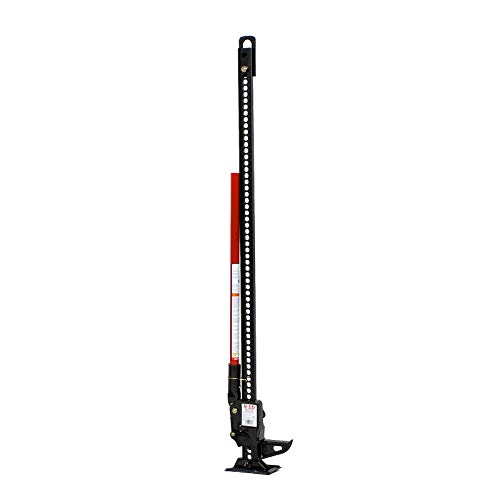
Hi-Lift Jack 60-Inch Cast and Steel All-Cast
The iconic off-road jack with a 7,000-pound capacity and 60-inch travel, capable of lifting, pulling, and winching in the field.
Winches: when to invest and when to skip
A Warn Zeon 10-S Winch is the self-recovery solution for solo overlanders on serious terrain. It requires a winch-compatible bumper or a receiver hitch mount, a tree saver strap or an anchor point, and the knowledge of how to use it safely with a dampener on the rope.
If you always travel with at least one other vehicle, a kinetic rope and shackles cover most scenarios at a fraction of the winch purchase price. If you run remote solo routes regularly, a winch is genuine insurance. Buy quality: cheap electric winches from unknown brands have failed during extractions with predictably bad results. Warn's track record on the Zeon series is extensive in real expedition use.
Field reference / File TBG-087 recovery gear

Warn Zeon 10-S Winch
A 10,000-pound-rated Warn winch with a Series 10 motor, synthetic rope, and waterproof solenoid for bumper-mounted self-recovery.
Field reference / File TBG-010 recovery gear
MAXTRAX MKII Vehicle Recovery Boards
The gold-standard traction boards used by professional expedition teams, molded in reinforced nylon with aggressive cleats that bite into sand, mud, and snow.
Field reference / File TBG-022 recovery gear
ARB Kinetic Recovery Rope 7/8in x 30ft
A double-braid kinetic rope with 7/8-inch diameter and 30-foot length that stretches under load to generate a snap-back extraction force without shock-loading your recovery points.
Field reference / File TBG-071 recovery gear
Factor 55 FlatLink Shackle Mount
A CNC-machined aluminum D-ring shackle mount rated to 40,000 pounds that replaces standard tow hooks for a proper recovery attachment point.
Field reference / File TBG-087 recovery gear
Hi-Lift Jack 60-Inch Cast and Steel All-Cast
The iconic off-road jack with a 7,000-pound capacity and 60-inch travel, capable of lifting, pulling, and winching in the field.
Field reference / File TBG-087 recovery gear
Warn Zeon 10-S Winch
A 10,000-pound-rated Warn winch with a Series 10 motor, synthetic rope, and waterproof solenoid for bumper-mounted self-recovery.
Field reference / File TBG-032 recovery gear
Bubba Rope Sidewinder Snatch Strap 30ft
A 30-foot nylon recovery strap with 20,000-pound breaking strength and looped ends that work with standard D-ring shackles.
FAQ
Frequently asked questions
What is the minimum recovery kit for overlanding?+
At minimum, carry a pair of MAXTRAX MKII traction boards, a rated recovery strap with shackles, and a shovel. This handles the most common stuck scenarios on sand, mud, and snow without a second vehicle. Add a kinetic recovery rope and a Hi-Lift jack for more serious terrain. A winch is the upgrade for solo remote routes.
What is the difference between a recovery strap and a kinetic rope?+
A standard recovery strap is static, transmitting a direct shock load through the recovery points on a snatch pull. A kinetic rope has elasticity that stretches under load, building energy and releasing it gradually like a spring. Kinetic ropes are easier on drivetrain and recovery points, especially on heavy vehicles. For multi-ton SUV and truck recoveries, the difference in shock load is significant.
Can you use a tow hook as a recovery point?+
Factory tow hooks are generally not rated for snatch recoveries. They are designed for slow controlled towing, not high-energy extraction loads. Using a factory hook as a kinetic rope attachment point risks bending or snapping the hook, which can then become a projectile. Use proper recovery shackles attached to rated receiver hitches, purpose-built bumper attachment points, or frame-mounted recovery rings.